


💬 Is Counselling Confidential? What You Need to Know Before Starting Therapy 💬
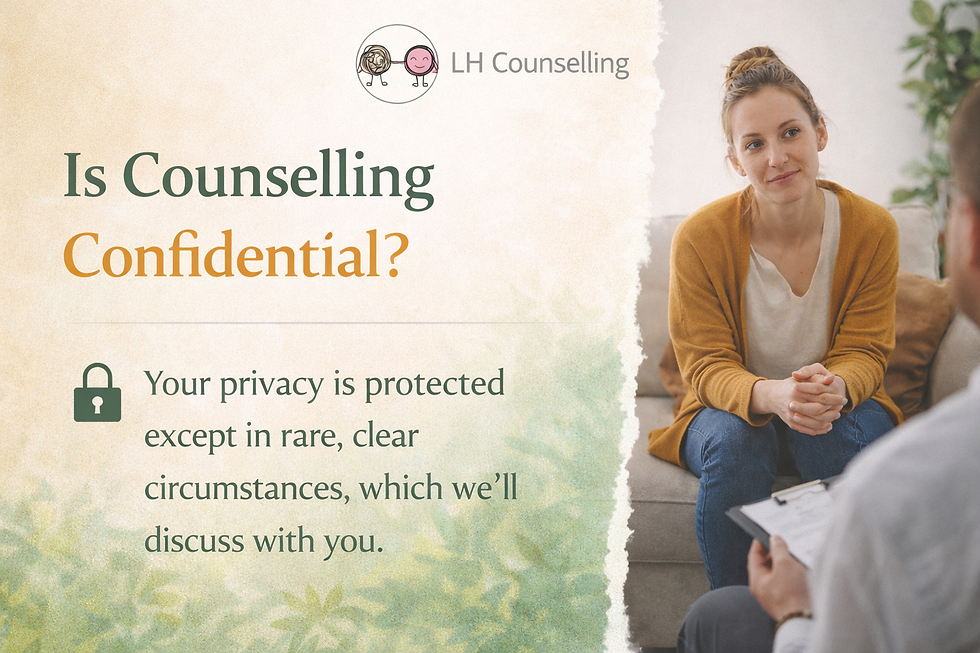
One of the most common concerns people have before starting counselling is confidentiality. It’s natural to wonder whether what you share will remain private, who might have access to that information, and what boundaries exist within therapy.
Understanding how confidentiality works in counselling can help you feel safer, more informed, and more confident about seeking support. This article explains what counselling confidentiality means, why it matters, and what exceptions may apply.
💭 Why Confidentiality in Counselling Is So Important
Confidentiality is a fundamental part of ethical counselling practice. It creates a safe, trusting space where you can speak openly without fear of judgement, exposure, or consequences.
When clients know their sessions are confidential, they are more able to explore difficult emotions, experiences, and thoughts honestly. This sense of safety is essential for therapy to be effective.
At LH Counselling, confidentiality is taken seriously and handled in line with professional and ethical guidelines.
💭 What Does Confidentiality in Counselling Mean?
In most cases, confidentiality means that what you talk about in counselling sessions stays between you and your counsellor. Your personal information, session content, and reasons for attending counselling are not shared with others.
This applies whether you are attending:
Private counselling
Short-term counselling
Long-term therapy
Counselling for stress, anxiety, or emotional wellbeing
Your privacy is respected at all times.
💭 Are There Any Exceptions to Confidentiality?
While counselling is confidential, there are a small number of ethical and legal exceptions. These exist to protect your safety and the safety of others.
A counsellor may need to break confidentiality if:
There is a serious risk of harm to you or someone else
There is disclosure of abuse involving a child or vulnerable adult
A court of law requires information
If confidentiality ever needs to be breached, this is done carefully and ethically, with your welfare as the priority wherever possible.
Importantly, these limits to confidentiality are explained clearly at the beginning of counselling, so there are no surprises.
💭 Will Anyone Know I’m in Counselling?
A common worry is whether employers, family members, or others will find out you are attending therapy.
If you are accessing private counselling, no one is informed without your consent. Your attendance is not shared with employers, GPs, or family members unless you request this.
Even the fact that you are attending counselling is treated as confidential.
💭 What About Notes and Records?
Counsellors keep brief, secure notes in line with professional requirements. These notes are stored safely and contain minimal information necessary for ethical practice.
They are:
Kept securely
Not shared with third parties
Used only for professional purposes
You are entitled to ask questions about how notes are stored and what information is recorded.
💭 Confidentiality Helps You Speak Freely
Many clients worry about being judged for their thoughts or feelings. Confidential counselling offers a space where nothing you share will shock or be criticised.
This can be especially important when discussing:
Anxiety or intrusive thoughts
Relationship difficulties
Shame, guilt, or self-doubt
Past experiences
Feelings you’ve never shared before
Knowing your sessions are confidential allows therapy to feel safer and more supportive.
💭 What If I’m Not Sure What I Want to Share?
You are always in control of what you talk about in counselling. Confidentiality does not mean pressure to disclose everything.
You can take your time, ask questions, and move at a pace that feels comfortable. A counsellor will respect your boundaries and support you in building trust gradually.
💭 Final Thoughts: Confidentiality Is There to Protect You
Confidentiality exists to support your wellbeing, not to trap or expose you. It allows counselling to be a space where you can explore your experiences honestly, safely, and without fear.
If concerns about privacy have been holding you back from starting therapy, it may help to know that confidentiality is central to ethical counselling practice.
If you’d like to learn more or discuss any concerns before starting, you’re welcome to get in touch or visit lhcounsellingservice.co.uk to find out more about counselling at LH Counselling.


Comments